PRIDE IN PRACTICE 2025: The Pride Pathways Experience
Our co-founder, Ian Goh, spent an amazing week at the 2025 Pride in Practice conference in Melbourne, Australia. Not only was Ian privileged to attend Australia’s leading national event dedicated to LGBTQ+ workplace inclusion, he was part of the Pride Pathways team that presented during the event.
Let’s take a look back at the Pride in Practice 2025 conference, the Pride Pathways presentation, and key takeaways we learned from this year’s PIP event.
Learn more about Pride Pathways, a comprehensive LGBTQ+ development program for Australian professionals.
What is Pride in Practice (PIP)?

The Pride in Practice (PIP) Conference is Australia’s premier national event devoted to LGBTQ+ workplace inclusion. It’s presented by the team at Pride in Diversity, a not-for-profit program devoted to advancing LGBTQ+ inclusion in Australian workplaces.
Established in 2010, Pride in Diversity has nearly 500 member organisations and serves as a key piece of ACON’s Pride Inclusion Programs.
2025’s PIP conference was held November 25-26 at Marvel Stadium in Melbourne. It featured 37 presentation sessions that ranged in topic from LGBTQ+ inclusion and leadership training, inclusivity to specific focus on transgender, lesbian and neuroqueer issues.
Opening remarks were given by Michael Woodhouse, CEO of ACON on Day 1. Day 2 opening remarks were presented by Dr. Justin Koonan, ACON President.
Meet the Pride Pathways Panel from PIP 2025
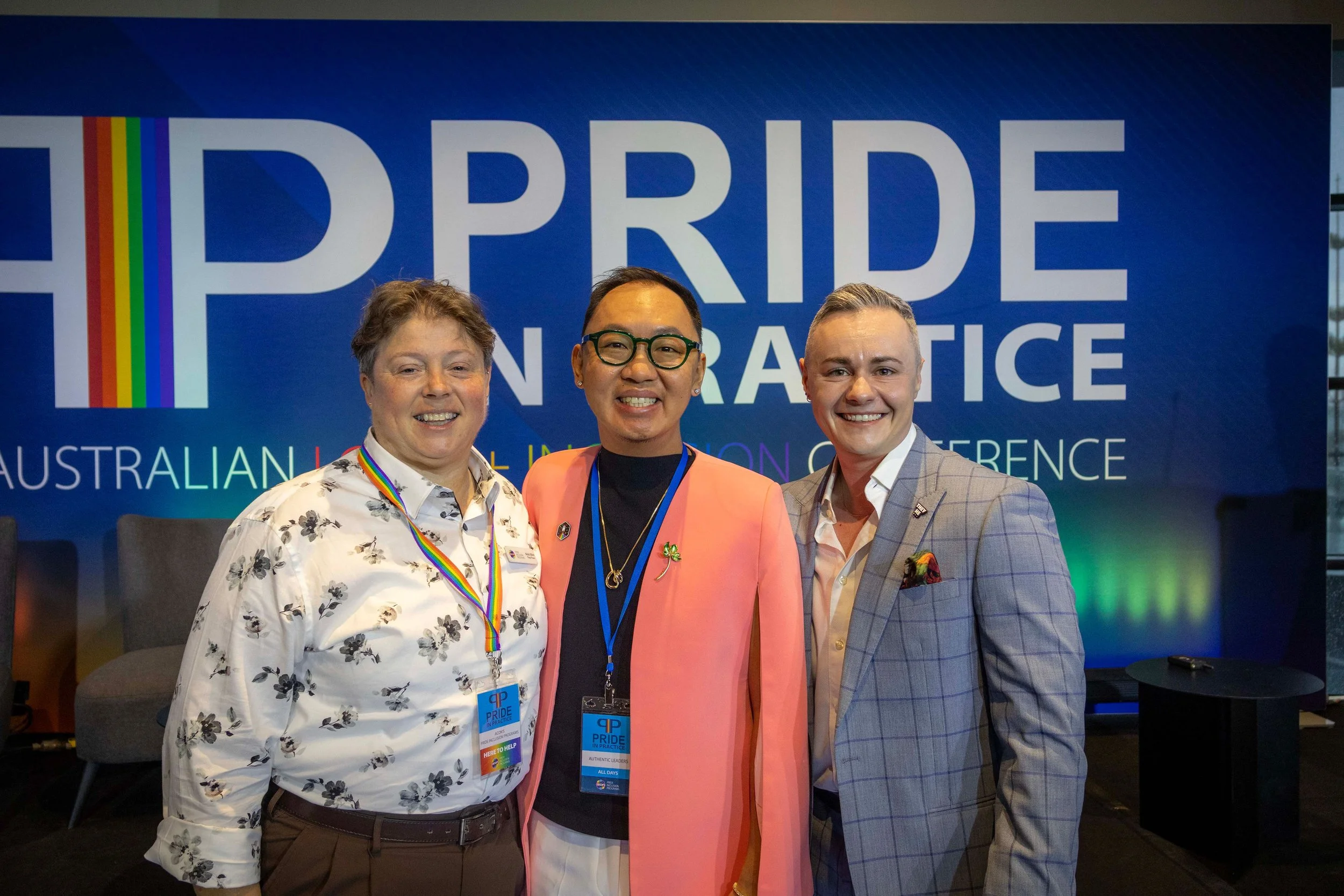
Nicki Elkin, Ian Goh and Dr. Oliver Alexander presented for Pride Pathways at the PIP 2025 Conference.
Ian presented with the team at Pride Pathways, a collaboration between Pride in Diversity and Authentic Leaders to deliver comprehensive LGBTQ+ talent development programming.
The panel for “Where Are All the LGBTQ+ Leaders?” included:
Nicki Elkin (they/them), Associate Director, Quality, Training & Research, Pride in Diversity
Dr. Oliver Alexander (he/they), Instructional Design and Training Manager, Pride in Diversity
Ian Goh (he/they), Co-Founder and Coach, Authentic Leaders
Nicki holds Masters degrees from the Leeds University Business School and University of Canberra, and offers expert-level execution of stakeholder engagement and project delivery. They are a fierce champion of inclusion and diversity in corporate environments.
Oliver possesses over 15 years in adult education and is a lecturer in sociology and gender studies. He’s developed bespoke programming focused on strategic learning, engagement and retention, and inclusive content development.
Together, Nicki and Oliver combine for over 30 years of experience and service to the LGBTQ+ professional community.
Our Presentation: “Where Are All the LGBTQ+ Leaders?”
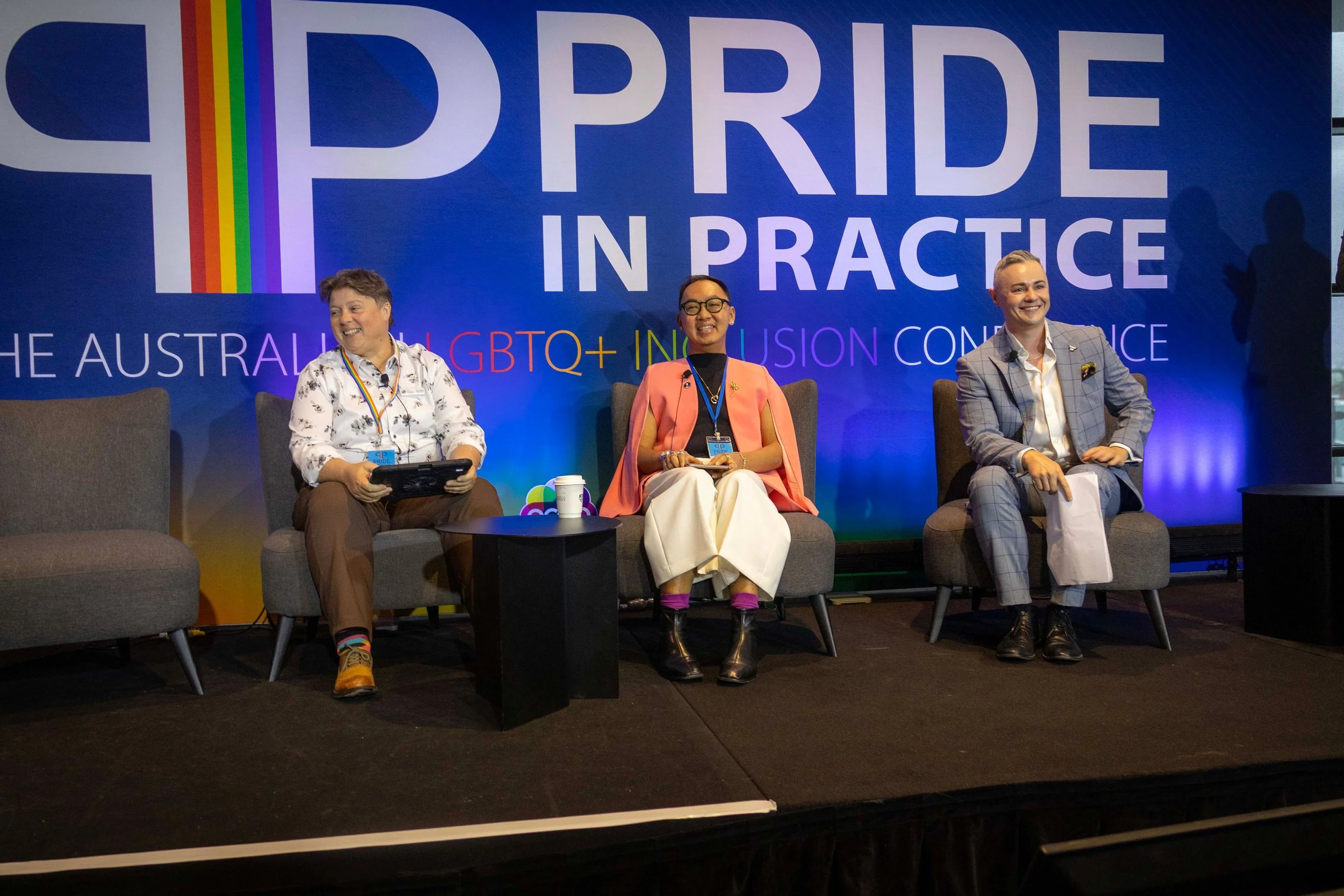
The Pride Pathways team presents at the 2025 Pride in Practice Conference in Melbourne.
The goal of “Where Are All the LGBTQ+ Leaders?” was simple: illuminate the lack of queer talent stepping forward to claim leadership roles in corporate settings, despite perceived advancements in diversity and inclusion.
The Pride Pathways presentation focused on leadership gaps by gender identity and sexual orientation, barriers to leadership roles for LGBTQ+ professionals, and the benefits of LGBTQ+-specific leadership coaching.
Identifying leadership gaps by gender and sexual identities
Nicki and Oliver led an enlightening discussion on the gaps in representation between professionals who seek and attain leadership roles in the workplace.
The statistics (via Pride in Diversity) shared were quite startling to some attendees:
The Australian Workplace Equality Index (AWEI) 2025 notes zero transgender men or women in executive team leadership roles, and just 1% of executives openly identifying as transgender non-binary.
Just 4% of executive roles are held by cis-gender LGBTQ+ women and men.
This lack of LGBTQ+ executive representation directly causes a dearth of visibility- which, in turn, causes rising queer talent to not “see themselves” rising to positions of leadership.
Barriers to LGBTQ+ leadership in business
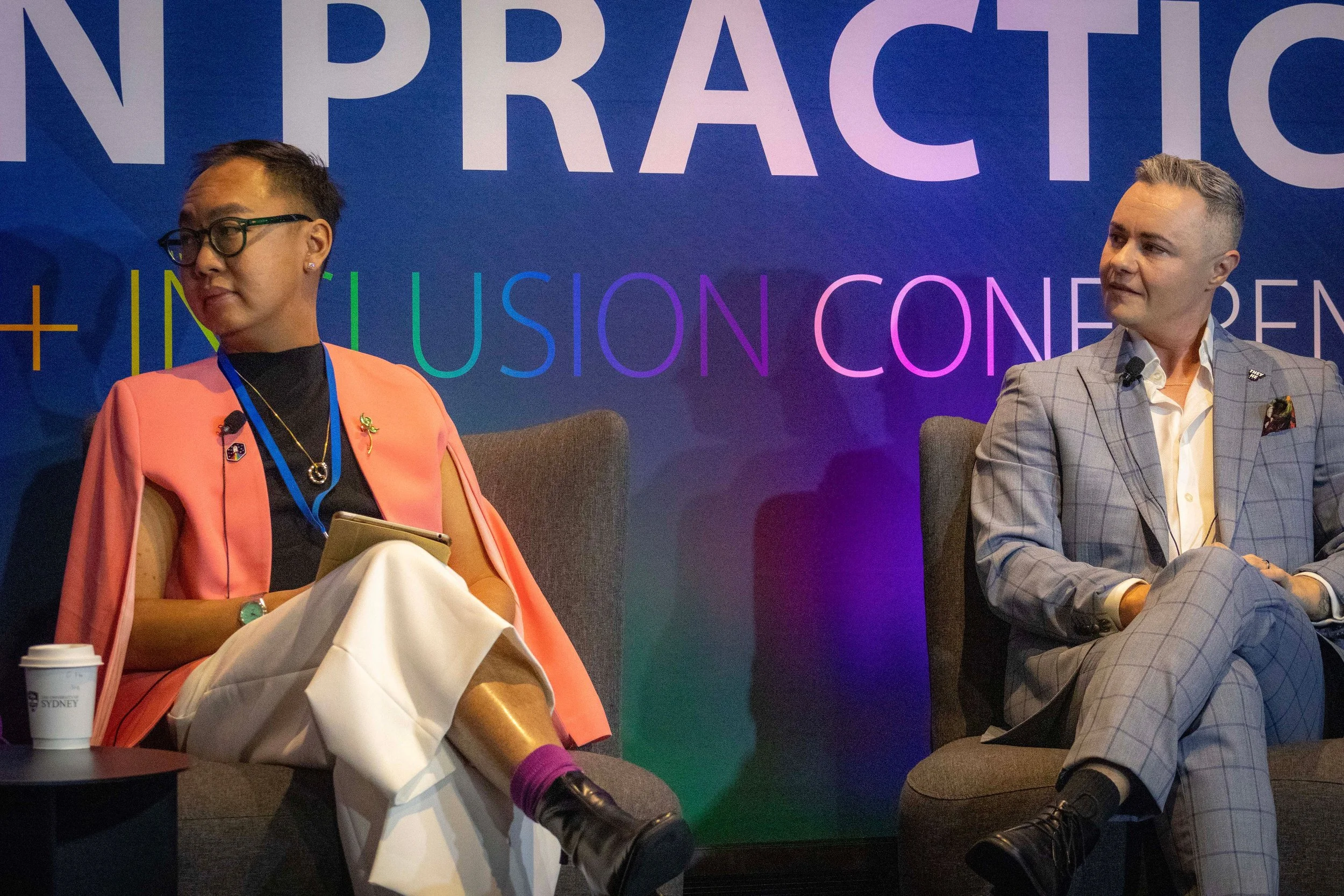
Ian Goh and Dr. Oliver Alexander on the Pride Pathways panel at PIP 2025 in Melbourne.
The greatest barrier to queer leadership is a lack of visible role models. A lack of LGBTQ+ executive visibility creates a workplace culture where evolving queer talent does not have role models to emulate.
This culture instills doubt and a lack of psychological safety, as evidenced in the 2025 AWEI report:
In corporate settings with no LGBTQ+ executives, junior LGBTQ+ staff are 27% less likely to perceive opportunities for advancement.
In corporate settings with no LGBTQ+ executives, junior LGBTQ+ staff are 18% more likely to seek a new job within 12 months.
Overall job satisfaction among junior-level LGBTQ+ employees is 22% higher when a senior-level LGBTQ+ role model is present.
The presence of queer executives also emboldens gender-diverse and LGBTQ+ talent to be their authentic selves at work.
“A role model with a similar (or same) identity has the effect of almost doubling the likelihood of employees being out to all or most of their colleagues,” the presentation stated.
LGBTQ+ Leadership Coaching is the Solution
It’s in the ethical, social AND financial best interest of corporate entities to invest in and systemically include LGBTQ+ leadership development coaching and training.
This conclusion comes not only from our direct work in the space and Pride in Diversity’s proprietary data, but from throughout the global corporate and academic communities. The results aren’t just based in fairness and equity- they’re based in tangible financial growth for progressive organisations:
“Employees who feel a sense of belonging are more engaged, leading to greater productivity and a more harmonious workplace.” - Melbourne Business School
Harvard Business Review notes that businesses with greater LGBTQ+ diversity achieve 19% greater innovation-based revenues.
“Large companies with stronger LGBTQ+ inclusive policies and practices delivered increasingly strong financial results the longer they had these policies in place.” - Human Rights Campaign
Programs like Pride Pathways and Authentic Leaders help queer professionals confront and overcome five key blocks between themselves and being the leader they aspire to be:
Encouraging divergent thinking
Overcoming and curing burnout
Putting our hands up
Creating authentic connection
Conquering self-doubt
They also covered the “Three Ps” that block LGBTQ+ individuals from becoming the authentic leaders they were born to be:
Perfectionism
People-Pleasing
Pretending
Takeaways: Our PIP 2025 Experience
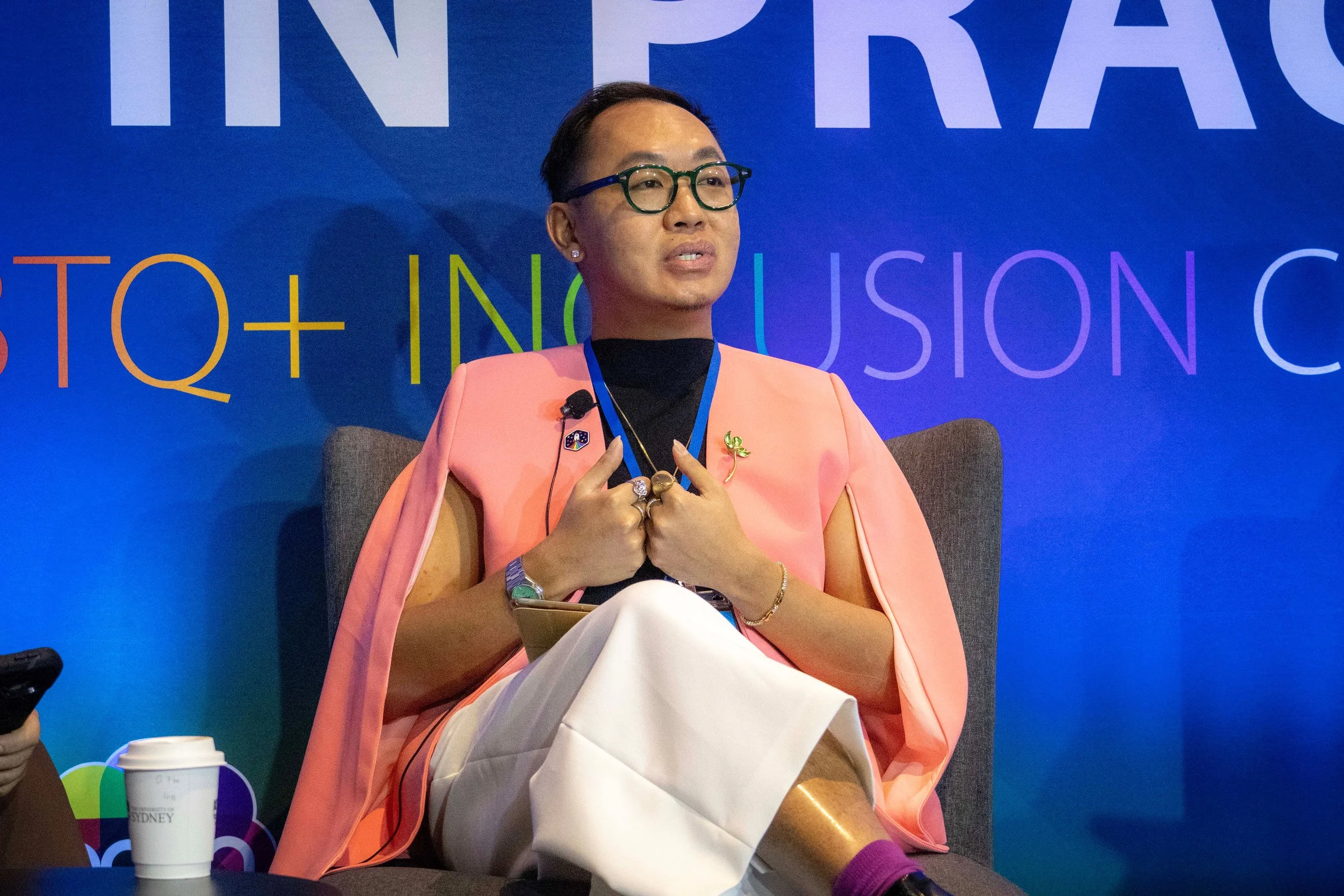
Ian described his time at Pride in Practice 2025 as “transformative”. This included not just his involvement in the Pride Pathways presentation, but also connecting on the conference floor and attending enlightening talks and networking events.
“The ability to make connections with people on and off stage was such a privilege. It felt like we were coming out about the work and the learning we’ve been creating for the past 7-8 years,” Ian shared.
“It was good to see and feel so much love and potential in the room. LGBTQ+ leaders have always been here. The question is: will we step in and take the lead?”
PIP 2025 serves as a highly visible reminder that the bonds among LGBTQ+ professionals- and their allies- are strong and tenacious. While there might be misinformation or fear-filled rhetoric, quantitative and qualitative data shows the opposite.
We are here, whether DEI exists or not. And we will stand up for ourselves, and each other.
We invite the world to attend future Pride in Practice events, celebrate the accomplishments of Pride in Diversity, and step into the future with bright eyes towards inclusive policy and practices.
And we invite progressive organisations interested in developing diverse talent (and strengthening their bottom line) to install LGBTQ+ leadership coaching as a necessary part of their talent development programming.
If you’re in Australia, learn more about Pride Pathways.
If you’re in Asia-Pacific or around the world, discover the power of Authentic Leaders.