LGBTQ+ LEADERSHIP REPORT: 2026 CALL TO ACTION
Restoring Wholeness to Ourselves, and the Workplace.
1. Introduction.
Meditation: “Authenticity is your competitive advantage.”
– Claudia Brind-Woody
One could presume that we, the Authentic Leaders team, approach this white paper with hesitancy and concern. Given the global legislative attacks on DEI and downturn of psychological safety among the LGBTQ+ workforce, it would be natural to assume this report is negative, or at least pessimistic.
Nothing could be further from the truth.
We approach this 2026 LGBTQ+ leadership report with optimism and resolve. With a sense of renewed confidence- because we recognise it is time for LGBTQ+ professionals to stand up for themselves.
And we believe they will.
We invite today’s queer leaders to restore wholeness to themselves, and to the workplace. These invitations must happen in order- one must embrace their full, authentic self and unleash it upon the world to inspire true change around them.
Detractors argue that inclusion initiatives are a ‘handout”- an “unfair advantage” for marginalised people. It is difficult to change the minds of these people. But there is a simple way to defeat that rhetoric:
You can’t give someone a handout if they’ve earned it. When we show up with our authentic selves, our genius and our gifts, we become impossible to ignore.
Therefore, these are our 3 fiercely loving calls to actionfor LGBTQ+ business leaders in 2026:
To recognise that psychological safety at work is not a goal- it is merely the starting line.
To make your contributions undeniable by identifying, recognizing and demonstrating your unique gifts- then, by activating the allies in your midst.
To strive for authentic representation in the workplace by presenting queerness as an asset, rejecting misinformation, and owning our identities.
Meet Our Powerful Contributor
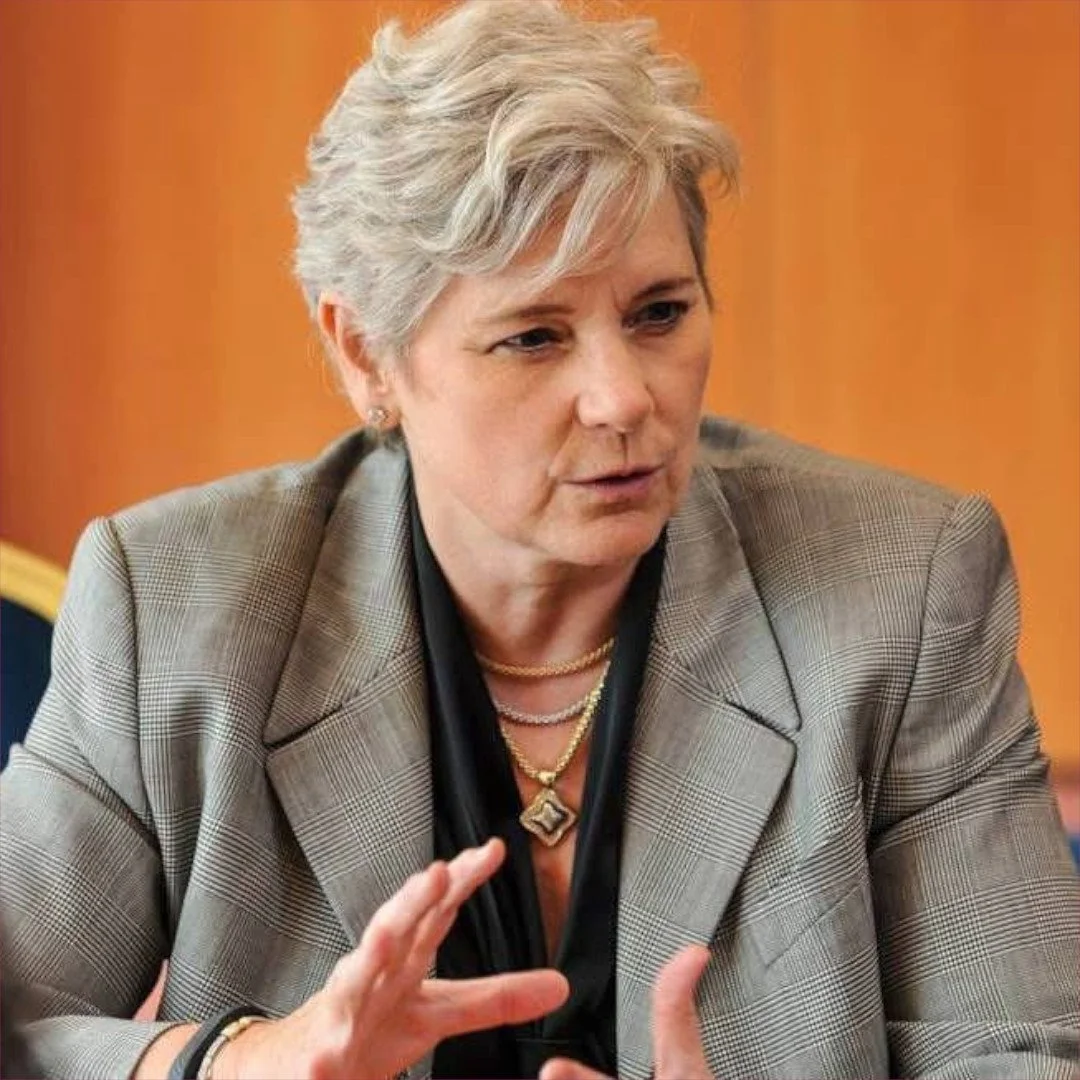
Claudia Brind-Woody
To gain deeper insight into the steps today’s queer leaders must take to become authentic leaders, we engaged in meaningful conversation with Claudia Brind-Woody, former Global VP and managing director of intellectual property at IBM.
Claudia’s track record of authentic, successful leadership spans decades. She spent three years as Assistant Dean of the College & Graduate School of Business at the University of Texas at Austin, where she first openly identified as a lesbian at work.
Claudia served as Global Co-Chair for IBM’s LGBT Executive Taskforce during her time with the company. She’s also served on the Board of Directors of Lambda Legal, Out & Equal Workplace Advocates, Stonewall Global Diversity Champions Programme and others.
Her singular, earned perspective and call for self-reliance among today’s queer professionals adds immense value to this paper.
Our Data, Expertise and Experience
Over the last 8 years, our work at Authentic Leaders has focused primarily on leadership coaching and development for queer professionals in the Asia-Pacific and Australia regions through the Authentic Leaders Programme.
We reach these conclusions through internal data and feedback from graduates of the Authentic Leaders programme, data and feedback from our partnership with Pride Pathways in Australia. Since 2018, our clients and direct partners include:
ACON’s Pride in Diversity
PwC Australia
KPMG Australia
Deloitte Australia
Woodside Energy
Johnson & Johnson Asia-Pacific
Oliver Wyman
Hello Fresh
We also source external statistics and findings from regional LGBTQ+ resources like Open For Business and the LGBTQIA+ Support program at Curtin University.
2. Safety is Not Enough.
We’ve seen progress and change in systems and organisations in the context of actual and psychological safety being afforded for LGBTQ+ professionals. And yet, reported psychological safety for queer employees has not actually improved:
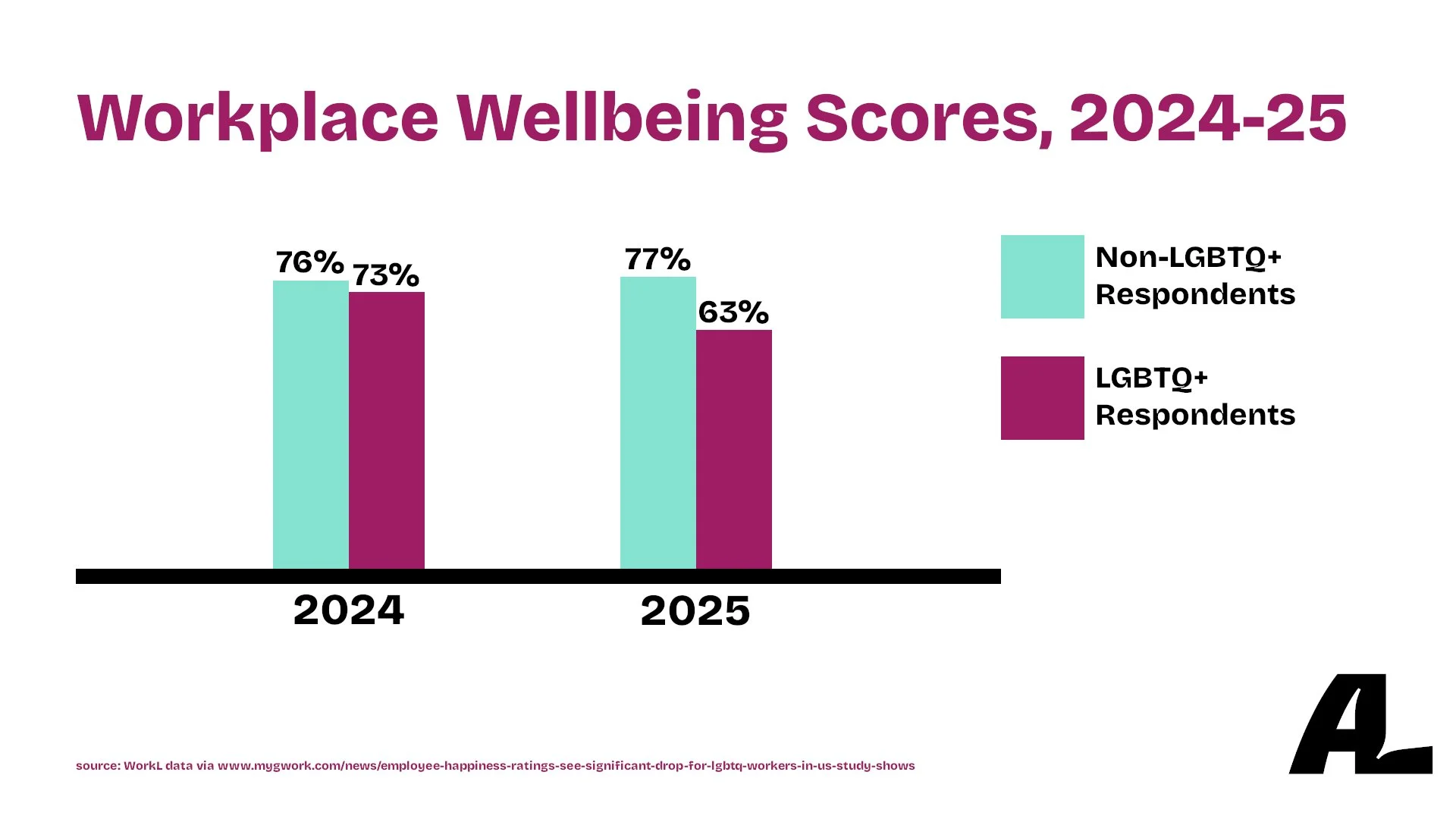
LGBTQ+ workplace wellbeing dropped from 73% to 63% in 2025- while heterosexual employee wellbeing increased from 76% to 77%. (WorkL)
14% of LGBTQ+ employees are open about their sexual or gender identity at work, compared to 45% of the general workforce. (Monster Insights)
36% of LGBTQ+ employees faced workplace discrimination in the last year, vs. 17% of non-LGBTQ+ employees.(Center for American Progress)
Queer professionals feel less safe at work in 2025 than they did in 2024. So if DEI initiatives are reporting progress in psychological safety for LGBTQ+ folks, why don’t queer workers actually feel safer?
We find the answer to be two-fold: a lack in truly systemic inclusion for queer professionals, and the innate fear of LGBTQ+ people to demand necessary change to the system.
Where DEI Efforts Continue to Fall Short
The intended goal of DEI initiatives in the workplace is to create a safer space for individuals in minority groups through diversity, equity and inclusion initiatives. The mission: to create a high-performing environment for all employees.
And yet, DEI’s continued focus on these surface-level issues often fails to address the deeper systemic and cultural issues that foster fear and self-exclusion among LGBTQ+ people in the workplace.
The lived reality of queer professionals is inherently different from their coworkers. A toxic blend of internalised homophobia and external discrimination hinders many LGBTQ+ people from unleashing their true potential at work.
Current “anti-woke”, anti-DEI sentiment compounds these issues — queer professionals see consistent, real-world examples of anti-LGBTQ+ doctrine on social media, on the news, and in government and judicial action.
These external pressures also negatively impact DEI initiatives. Much was made of large corporations like Pepsi, Disney and Google rolling back DEI this year. But existing DEI programs without substantive LGBTQ+ programming do little more than tokenize queer employees and “check the diversity box”.
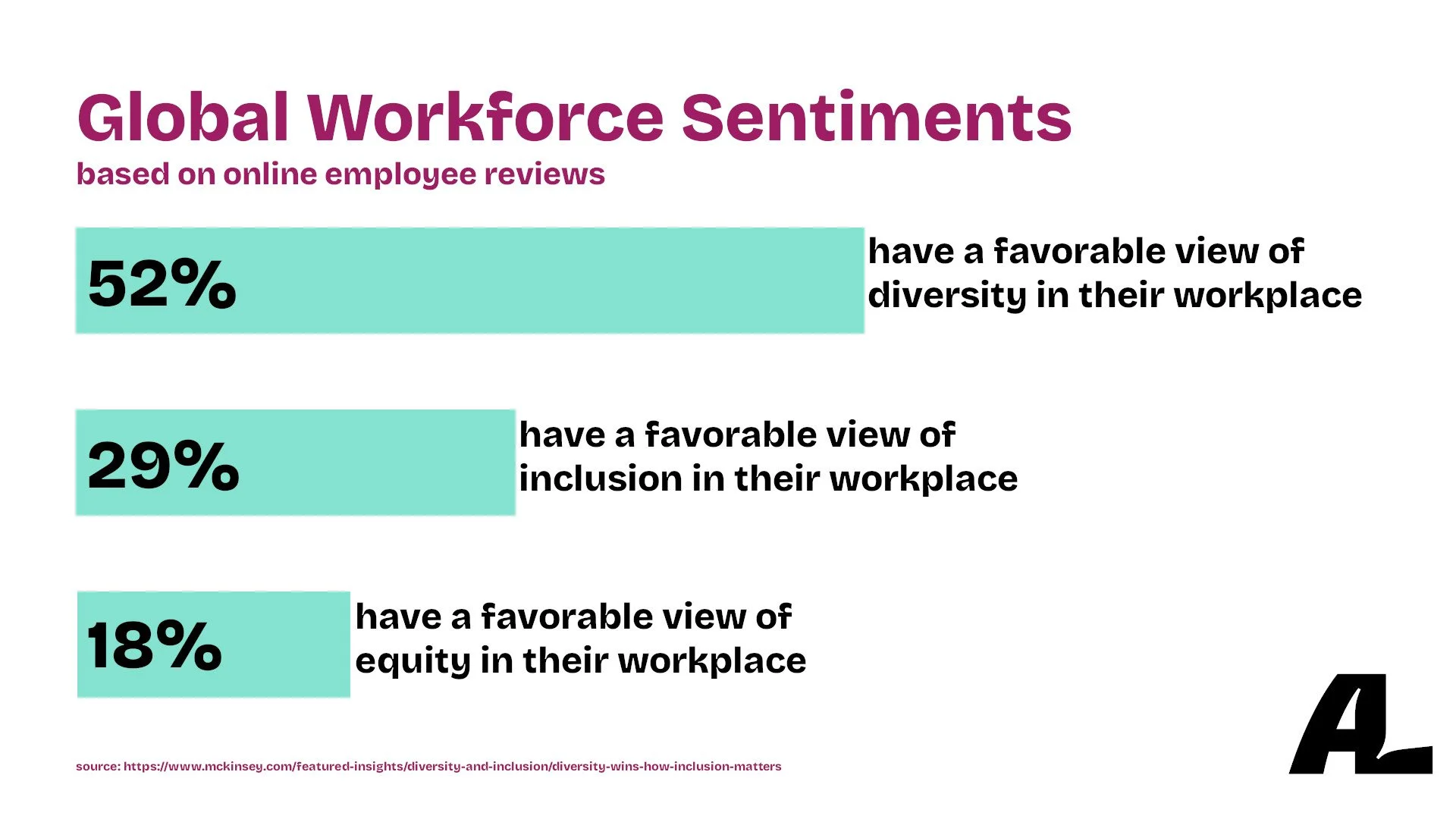
The proof is clear: while 52% of the workforce views diversity in a positive light, only 29% feel positively about inclusion — and only 18% about equity (McKinsey and Co).
This data indicates that while a majority of all employees view diversity favorably, there is a distrust that true inclusion and equality efforts are established:
Among queer people, this means a lack of true representation and the presence of “diversity washing” (i.e. one Pride party or anti-bias seminar per year).
Among non-queer people, this indicates a lack of clear messaging that inclusion efforts do not equate to preferential treatment for minority groups.
LGBTQ+ Professionals Must Step Forward
It’s incredibly difficult for queer professionals to step forward and demand systemic change. Beyond their internalised self-doubt, the sharp increase in government and public critique of DEI initiatives heightens their fear of “making noise”.
The call to “just be yourself and stand up for your rights” feels much scarier when the parachute of psychological safety is removed from their backs.
Claudia Brind-Woody speaks of “the cost of thinking twice”: the constant “internal second conversation” queer employees have about what is safe to say, do or disclose at work.
“We all talk about our families at work, whether it's saying, ‘I'm going to go to my child's football game, or we're going on holiday,’ right?” Claudia explains.
For LGBTQ+ people afraid of discrimination or reprisal, Claudia says friendly inquiries from co-workers become “very fearful questions”.
This causes every conversation to become a careful calculation: from “How was your weekend?” to “Are you going for that promotion?”.
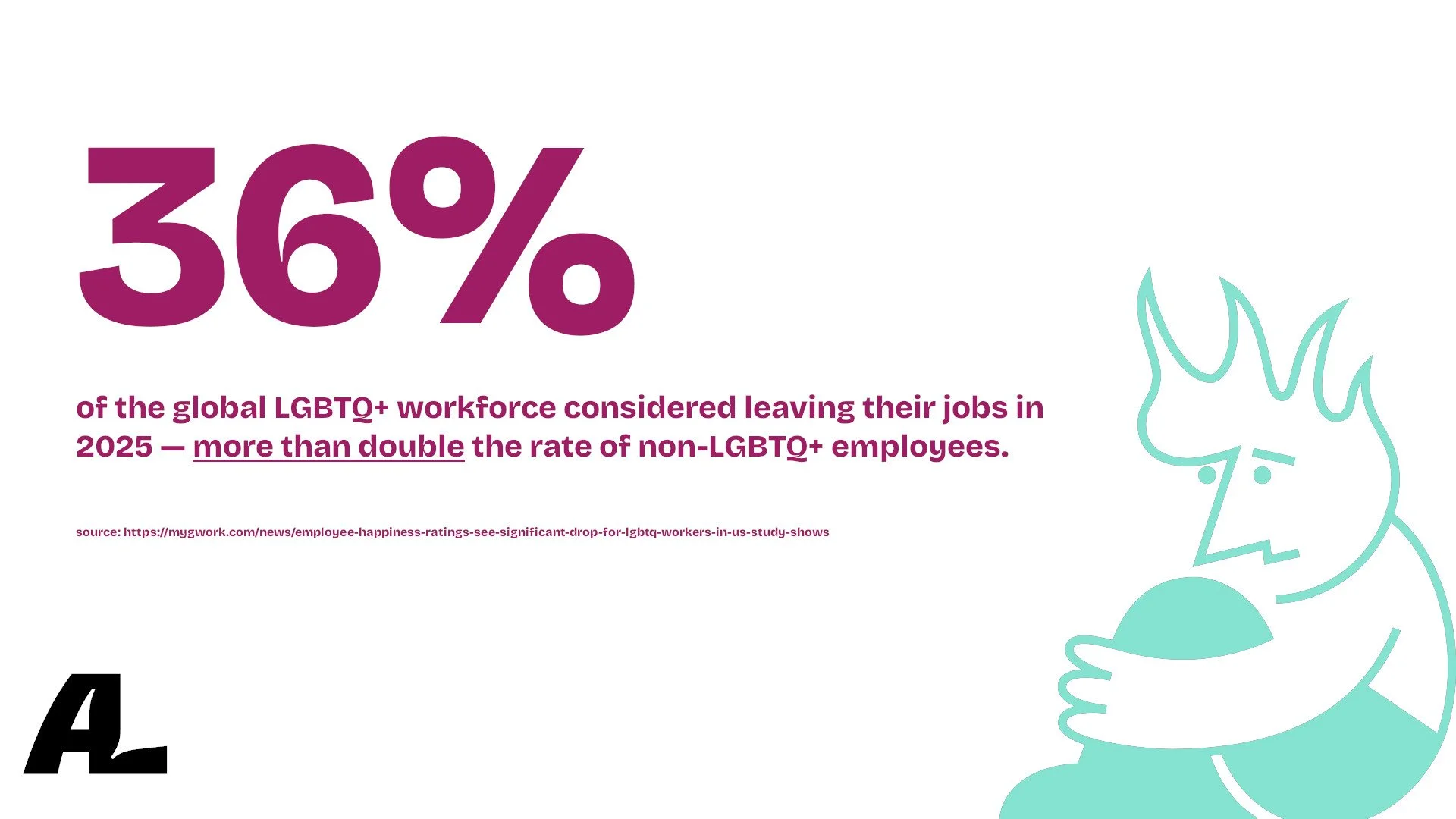
The result: more LGBTQ+ employees consider quitting their jobs than demanding change. 36% of the queer workforce considered leaving their jobs in 2025, nearly double the “flight risk” of their heterosexual colleagues (WorkL).
We respect and acknowledge the deep trauma, negative lived experiences and self-doubt that create this choice of “flight over fight” in our queer work community. But we also — lovingly — assert that this is unacceptable.
The downside of DEI initiatives for LGBTQ+ people, even the best ones, is the false sense of security they instill. “Let them let me” is the name of the game:
Let them let me feel safe at work.
Let them let me pursue promotions and opportunities.
Let them let me demand true equity.
These are wonderful thoughts on the surface. But when overreliance on DEI exists, what happens when these “failsafes” are removed or ineffective?
We cannot wait for a DEI manager to tell us it’s okay to be brave.
Our self-worth and self-confidence cannot be beholden on how we are perceived and valued by others. This includes how we are perceived and valued by those in the DEI sphere.
We have a part to play in changing the system, as scary as it may be.
In today’s business environment where DEI initiatives are waning, it’s incumbent on the individual to seek ways to gain psychological safety in the workplace. While it’s often terrifying, the personal and professional rewards are great:
89% of LGBTQ+ workers who reported high psychological safety felt they could potentially advance to more senior roles in their organization. (EY)
LGBTQ+ women who are open about their sexuality at work are half as likely to leave their current employer in the next year. (McKinsey and Co)
Employees who feel a sense of belonging are more engaged, leading to greater productivity and a more harmonious workplace. (Melbourne Business School).
This sense of belonging offers more than personal benefit — it drives corporate profit. Companies with higher diversity levels display 19% higher innovation-based revenues. (Harvard Business Review)
A Powerful Lesson from Queer Gen Z Professionals
Queer professionals seeking a source of strength and inspiration are well-advised to look to the future. The Gen Z workforce showcases deep resolve and unrelenting bravery in asserting their queer identities at work.
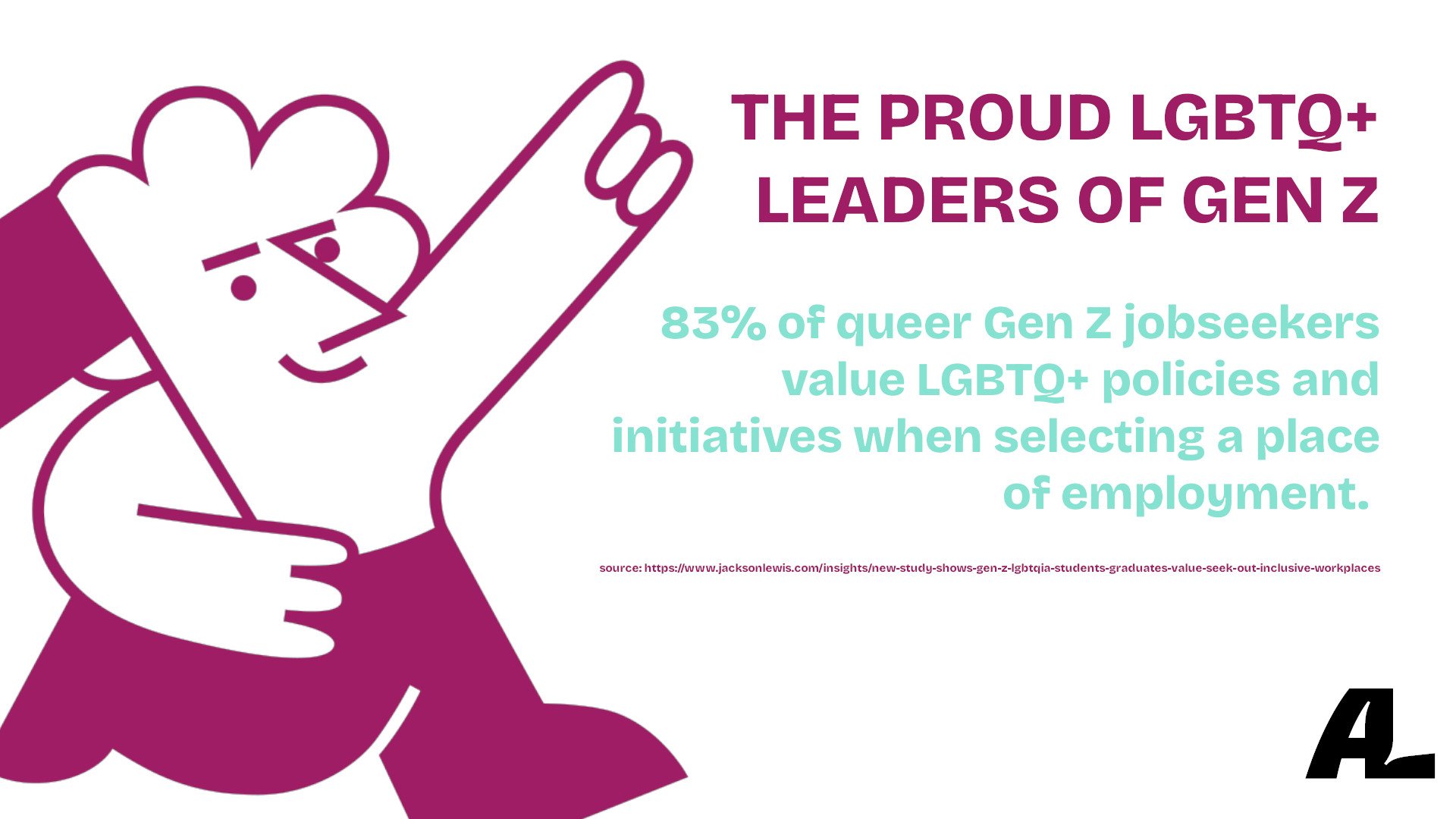
A Jackson Lewis study reveals the uncompromising, ferocious self-advocacy of Gen Z’s LGBTQ+ professionals:
83% of Gen Z LGBTQ+ jobseekers consider a company’s LGBTQ+ policies and initiatives when deciding where to work.
80% of LGBTQ+ students will avoid applying for a role at a company that has recently withdrawn its support for the queer community.
75% of Gen Z LGBTQ+ jobseekers expressed reservations about working for a company where they could not be out at work.
49% of young LGBTQ+ talent said a company with visible LGBTQ+ role models and allies would influence their decision to accept a job offer.
Only 5% of LGBTQ+ students believe employers are actively engaging in support for their queer employees.
These young queer jobseekers and employees embrace the truth about psychological safety: Safety is only the starting line.
Feeling safe at work doesn’t give LGBTQ+ people an advantage — it merely brings them to the beginning of a marathon that others have been running for decades.
In the midst of anti-DEI sentiment, we must show up to the starting line for ourselves.
Nobody’s coming back to the starting line to “make things fair”. They’re running their own race. It’s up to us to make things more equitable for ourselves.
We must be bold and advocate for ourselves.
3. Make Your Contributions Undeniable.
Detractors of DEI policy point to a common fallacy in their argument — the notion that minority employees are given “preferential treatment”.
On July 29, 2025, U.S. Attorney General Pam Bondi cited “preferential hiring or promotion practices” and “unlawful use of protected characteristics” in a memorandum that struck a death blow to DEI in many American organisations.
We recognise the hopeless feeling these comments cause in many LGBTQ+ professionals. They limit access to opportunity, safe spaces and promotion.
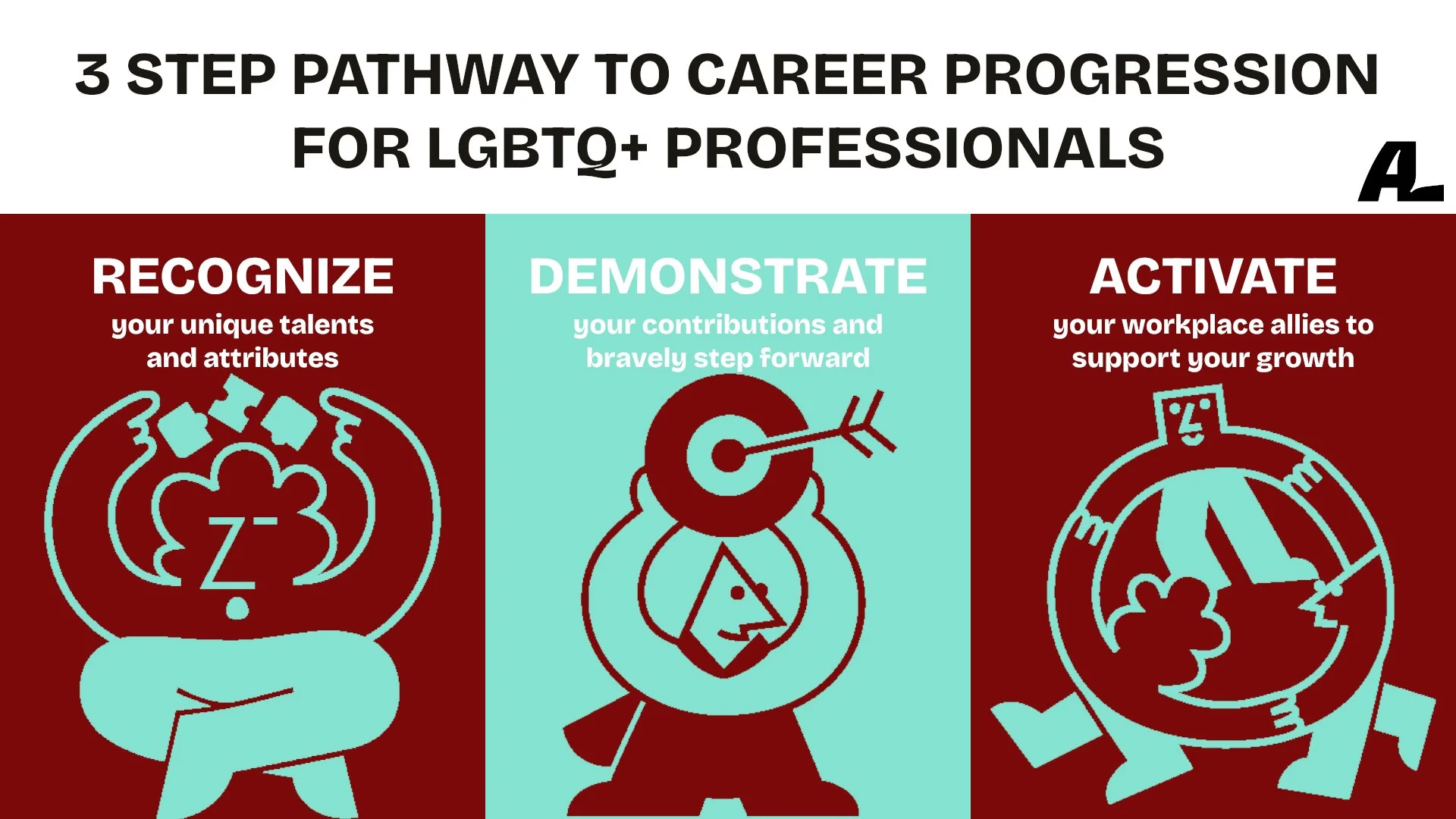
And yet, there is a clear pathway to success in spite of this powerful opposition: make your worth undeniable.
For queer professionals, this pathway involves taking 3 key steps:
Recognize how your talents and attributes are essential to your employer;
Demonstrate your contributions by stepping bravely forward; and
Activate the allies around you to support your growth.
In the current global political and social climate, the ability to walk this path separates powerfully authentic LGBTQ+ leaders from those who feel threatened and unsafe at work.
Recognize The Value of Who You Are
The odds of each human being born is roughly 1 in 400 trillion. This fosters genetic uniqueness that separates each life as singular and precious- and your singularity is of incredible value by itself.
That value is augmented by your lived experiences, educational history, social acclimation and prior work accomplishments.
Queer professionals must identify the strengths and inherently valuable traits they bring to the workplace. By doing so, one transcends the label of “LGBTQ+ employee” and becomes “the employee who’s exceptional at (X) or (Y)”.
“One of the things I share with people that I mentor everywhere, straight, gay, male, female, transgender, whatever they may be, is that as a business person, you need to be very good at something,” says Claudia.
“Start with that fact. We own our own careers, and we must add value. What are we authentically good at? I'm not trying to pose as something I’m not. I'm trying to bring my talent, my experience, my perspectives, my leadership to the table.”
Claudia’s must not only be taken by queer professionals seeking advancement in the current workplace environment. It must be reflected upon and internalised.
What you can do this year: Discover the connection between your queer identity and your singular gifts. Understand that who you are- your sexuality and gender identity included- is what empowers you to be the talented person you are.
Hiding at work not only dims your personal light. It dims your professional worth. Your gifts are informed by your lived experience. Be authentically yourself, and you amplify the power of these gifts.
Coming out in the workplace is not always easy. But finding pathways to do so is the first key to cracking the ceiling between you and your leadership potential.
Bravely Demonstrate Your Contributions

The most critical stage of queer workplace development is putting one’s hand up.
This simple act is often terrifying for LGBTQ+ personnel, especially in regions marked by deep-rooted cultural and political homophobia and discrimination.
Yet we must do more than show up. In spite of these fears, we must stand up and be undeniable in our value to the employer. This hearkens back to Claudia Brind-Woody’s statements on providing tangible merits.
In most parts of the world, legal recourse is available for LGBTQ+ employees who are subject to discrimination based on sexuality and/or gender identity. If you don't want to be judged for being gay, if you don't want to be judged for being trans, bring something else with you to work in your toolbox.
Make yourself unrejectable. If you’re then rejected, you know you’re working for the wrong people- and you have legitimate grounds on which to prove bias.
What you can do this year: Set a bold plan to visibly display your contributions. Do not sit quietly. You’ve achieved remarkable, tangible things. Stand behind them.
Keep a detailed log of your tasks, projects and their results. Start a spreadsheet today and fill it with the work you’ve contributed to, as well as its results.
Use data to quantify your impact. Show what you’ve done, and prove how it’s uplifted the company. Align your measurable impact with branded KPIs and organisational goals- then, use 1-on-1 time with your manager to highlight these achievements.
Most importantly: put your hand up for new, high-visibility projects. Ignore the self-doubt telling you “someone else is probably better”, or that “it’s safer to sit down”. Self-doubt is not real. Your ability to benefit these projects- and be rewarded for your role- is very real.
Activate Your Workplace Allies
Even the most accomplished queer leaders require the support and demonstration of workplace allyship- even the former Global VP of IBM.
“I cannot tell you how many times in the corporate world, I've sat in a conference room full of mostly men,” Claudia shared with us.
“I will have said something and been totally ignored. Five minutes later, the guy down the table says exactly the same thing. And the person leading the meeting goes, ‘oh, what a brilliant idea’.”
“And finally in one meeting, one of my colleagues said, I'm sorry. That was Claudia's idea, and you took it from her. Allies in all forms absolutely matter.”
What you can do this year: Identify coworkers who validate your experience. Build your relationships on clear communication and honest dialogue. Ignore negative self-talk that drives wedges between you and true allies at work.
As you display your authentic self at work and bravely step forward for opportunities, take note of who encourages you to do so. These people are your true support system- their value transcends “fun water cooler talk” about what’s on Netflix.
They are who you truly need- and whose support you truly deserve. These allies may not experience a toxic or limiting workplace culture the same way you do. But they also feel it. And something within them compels them to want to change it.
The courage you display in reaching out to develop relationships with these “sleeping allies” might just be the spark they need to take their own steps forward.
Showing up inspires people. Your courage and tenacity gives permission to others to step forward as allies and champion your cause.
4. The Quest for Authentic LGBTQ+ Leadership at Work.
We set three goals for all LGBTQ+ professionals for 2026 to achieve true authentic leadership in the workplace:
Presenting our queerness as an asset, not a definition;
Rejecting and correcting misinformation; and
Owning our authentic identities at work and beyond.
Queerness As An Asset, Not a Definition.
Much of this conversation has centered on identifying your gifts, fearlessly presenting them at work, and making yourself indispensable as a corporate asset.
But we must also not forget that being queer is a unique gift and talent in and of itself. This is not solely a matter of adding vibrant diversity to the workplace; data-driven proof suggests queer integration in corporate leadership drives financial growth.
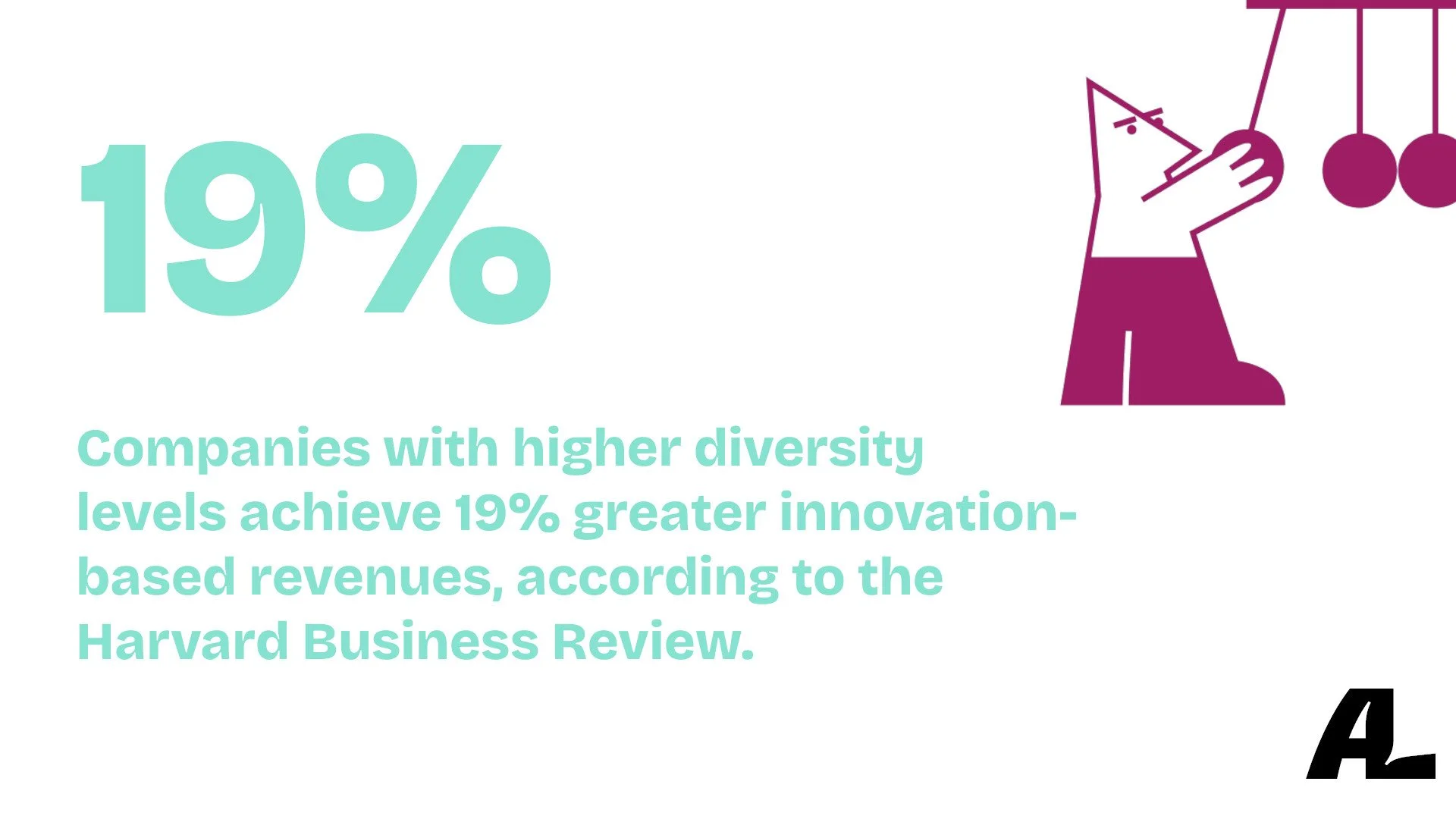
The Harvard Business Review finds that companies with higher diversity levels (that include LGBTQ+ individuals) display 19% higher innovation-based revenues.
A report from the Academy of Management states the presence of LGBTQ+ supportive policies is correlated with higher firm value and overall productivity.
There is a fine line between one's queerness being celebrated, and being included solely for that queerness. Today’s LGBTQ+ professional deals with the fear of becoming corporate “quota bait” — being hired because they’re a lesbian, gay man, bisexual, non-binary or transgender person.
The LGBTQ+ community has fought for equality for generations — and now, many are left to question whether or not corporate inclusivity is authentic or performative.
The answer to this quandary lies in our previous section. By identifying our unique talents, recognizing them as indispensable, bravely stepping forward to demonstrate our worth, and trusting our colleagues for support, our gifts and attributes become the measure of our worth in the workplace.
We then become free to present our queerness as a further asset, not be defined by it.
The Call To Reject and Correct Misinformation
Claudia speaks candidly about the responsibility today’s LGBTQ+ leaders have to dispel and correct misinformation, and the need to assertively promote the truth.
“We have to bring authenticity to our conversations,” she says. “Because what we see today is misinformation leads to fear, which leads to hate, which leads to violence. And we all have that duty to stop it at misinformation.”
The majority of current public misinformation regarding the queer community involves two key issues:
The definition of a gay family; and
The transgender community.
Claudia tells us how to speak directly to both issues:
“Let me share with you what really is a gay family. We still have to get the kids to school and figure out how to afford a holiday…we are [very much] ordinary in that way.”
“And let me educate you on the transgender community. No, we're not mutilating children. Let me tell you what the transition process is to somebody who really doesn't want to go through puberty in their biological gender. And let me also educate you that if stop taking hormone therapy, the effects are reversible.”
Ultimately, Claudia asserts the goal of these conversations is not to change people’s minds- but rather to fulfill our obligation to the truth.
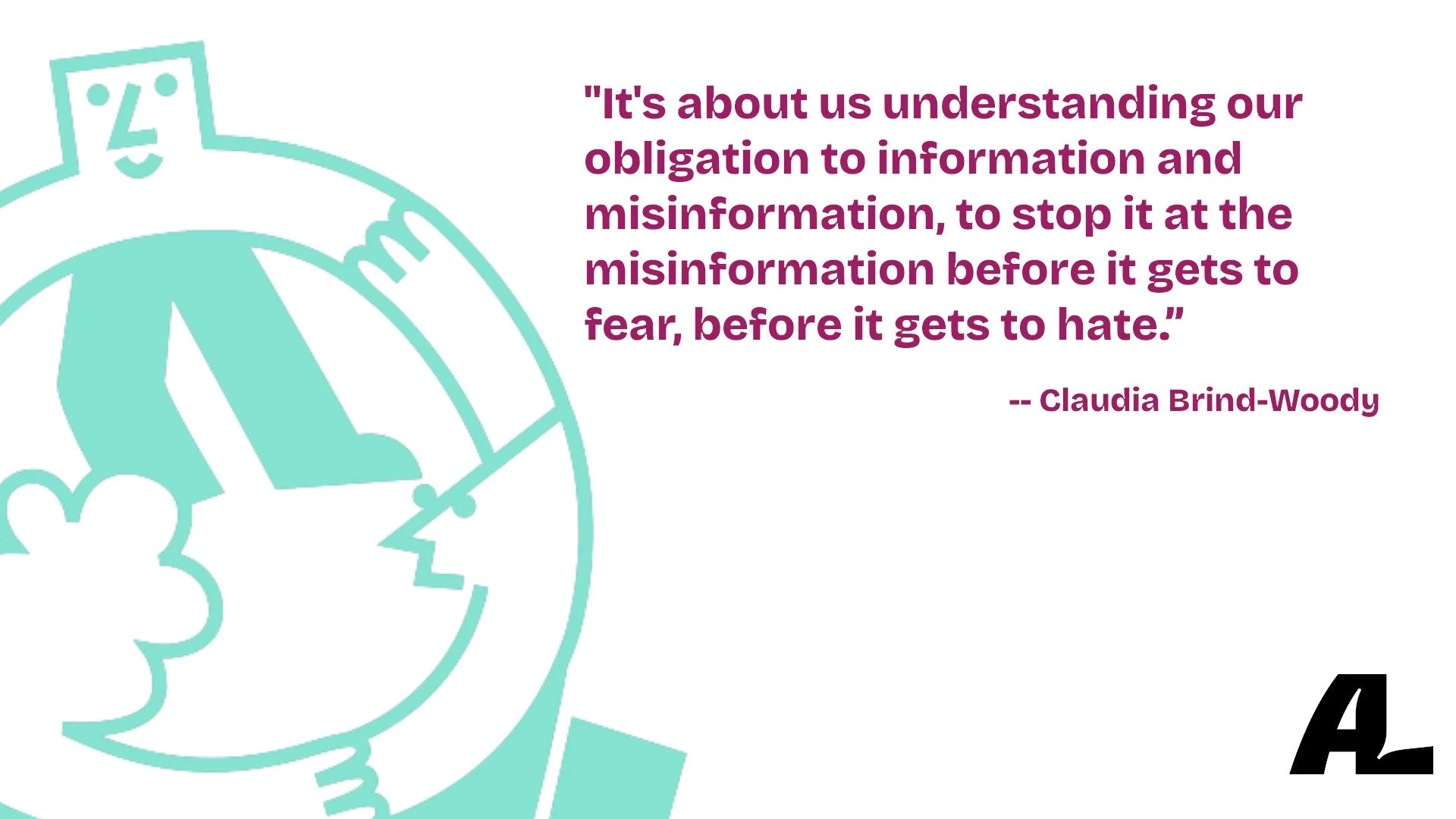
“If somebody changes their mind- perfect, no problem,” she says. “But it's about us understanding our obligation to information and misinformation is to stop it at the misinformation stage before it gets to fear, before it gets to hate, before it gets to violence.”
The quest to illuminate truth is one of true queer leadership, and it extends beyond the workplace.
“It happens at the personal level. It happens with your ally, your neighbor, you're the person you went to school with. It happens at the individual level,” Claudia concludes.
This commitment to honest dialogue transcends the label of “LGBTQ+ person” and elevates the modern professional to a place of audacious leadership and advocacy.
Owning Your Authentic Identity
In a previous publication, this is how we defined owning your authentic identity:
“Realizing the wholeness and intersectionality of your identities, and owning who you truly are as a unique LGBTQ+ person and leader.”
You are an LGBTQ+ person. You also may be a child, a sibling, and a relative. You also have hobbies, interests and passions. You have intrinsic skills and assets to share. These identities intersect at one focal point to reveal your true, whole self.
Identify your true, intersected self, and you’ll unlock the full potential of your role in the workplace. This intersection is unlike any other in the world — the ability to define and share it with co-workers is the key to a truly authentic career.
5. The Way Forward: Embedded Inclusion and Ongoing LGBTQ+ Leadership Development.
These are our 3 mission statements for progressive, inclusive organisations for the 2026 fiscal year:
A realisation of the fiscal and ethical advantages of a truly diverse workplace environment.
A systemic commitment, both financial and social, to develop and champion the LGBTQ+ business leaders within their organisations who display innovation, commitment and value to the brand.
A formal plan to embed queer leadership development and programming into the workplace culture, beyond the often-performative aspects of “DEI”.
It is more financially and socially critical than ever for progressive organisations to embed leadership development training for LGBTQ+ business professionals in the corporate space.
And it must include two specific types of programming:
Corporate-supported queer leadership development and coaching;
Individually-focused leadership coaching for queer business professionals.
What Does Corporate-Supported Queer Leadership Look Like?
Corporate-supported queer leadership development includes:
Formal programmes delivered at scale: Cohort-based leadership training for LGBTQ+ professionals across all organisational levels
Executive sponsorship: C-suite leaders championing queer talent in promotion decisions, stretch assignments, and succession planning
Dedicated resources: Budget allocations, protected time, and infrastructure signaling strategic priority
Peer communities: Spaces where LGBTQ+ professionals explore leadership challenges unique to their experience
Skills development: Targeted training in executive presence, strategic networking, salary negotiation, and political navigation
Embedded infrastructure: Woven into talent frameworks, performance conversations, and career progression pathways
This is systemic investment, not episodic intervention. Effective corporate programmes create communities where LGBTQ+ professionals can navigate visibility decisions, overcome internalised barriers, and leverage their queerness as a strategic asset.
The work is measured, tracked, and tied to organisational outcomes. It creates enduring beyond individual champions or political trends because it's structural, not performative.
Individually-Focused LGBTQ+ Leadership Coaching
Individual LGBTQ+ leadership coaching provides:
Tailored support for each professional's unique intersection of identities, experiences, and aspirations
Internal barrier work: Addressing perfectionism, people-pleasing, and pretending learned through systemic exclusion
Confidential guidance for high-stakes decisions like coming out, navigating transitions, or challenging discrimination
Leadership readiness acceleration: Building specific capabilities needed for the next role
Personalised transformation: Intensive development that scaled programmes cannot replicate
A bisexual woman navigating tech leadership faces different barriers than a trans man in finance or a non-binary professional in consulting. Individual coaching honours this specificity, creating space to explore patterns, understand barriers, and develop strategies to overcome them.
A skilled coach who understands queer professional experience guides decisions with both empathy and strategic insight. This helps leaders own their impact, lead with authenticity, and claim authority in rooms that weren't built for them.
Together, corporate-supported programmes and individual coaching create a comprehensive ecosystem where LGBTQ+ professionals don't just survive- they lead, thrive, and reshape organisations from the inside out.
6. Conclusion.
LGBTQ+-specific business leadership coaching and development works. It teaches queer professionals to confront and overcome internalised self-doubt and entrenched fears, to unleash the authentic leader within each of them.
The Authentic Leaders Program provides programs and platforms to queer people in a lovingly inclusive environment, with a professionally challenging voice. We enable and empower queer people to access their full potential.
Further, we assist inclusive organisations in embedding these programs and platforms. By doing so, they transcend the often-performative and transient nature of DEI initiatives, and provide a reliable foundation for LGBTQ+ talent identification, development and progression.
For more information about Authentic Leaders, please visit these pages: